
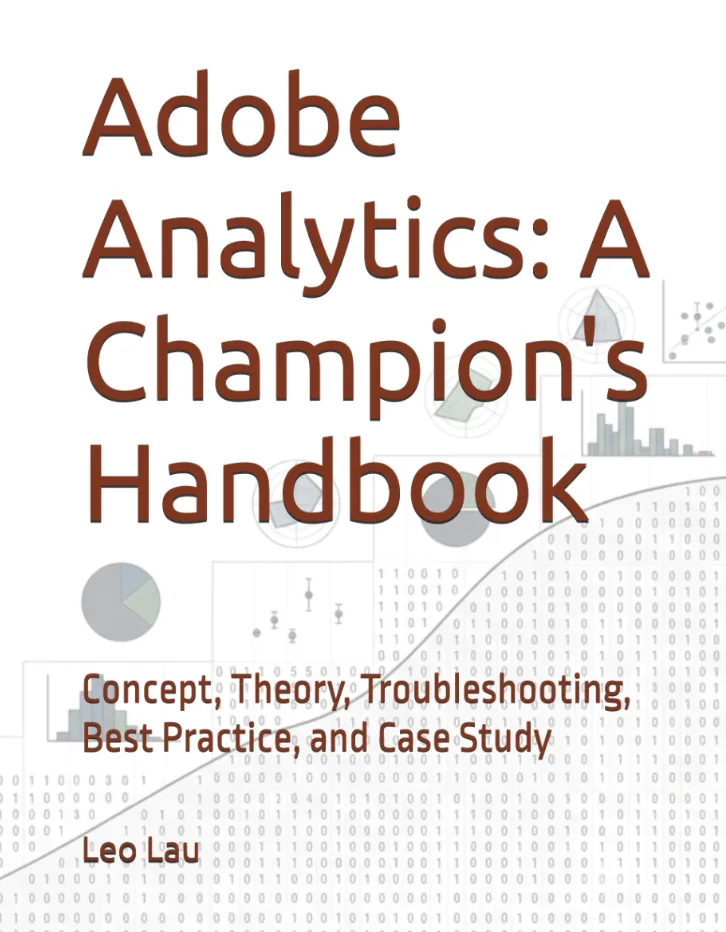
Every click, scroll, abandoned cart, and conversion holds intelligence that can transform how organisations compete, serve customers, and scale. Adobe Analytics captures this intelligence at enterprise scale—turning noise into signal, signal into insight, and insight into action.
This handbook is not a generic user manual for clicking buttons in the UI. It is a strategic and tactical playbook for implementing, analysing, and governing Adobe Analytics at global enterprise scale.
Key Book Capabilities
- Implementation Mastery: Build robust, highly reliable tracking architecture from Web SDK to native Mobile Apps and server-side APIs.
- Analytical Power: Learn to configure advanced segments, calculated metrics, and custom workspaces that compel stakeholders to act.
- AI-Driven Insight: Leverage out-of-the-box machine learning like Anomaly Detection and Contribution Analysis to find root causes in seconds.
- Ecosystem Integration: Bind your data layers directly to Adobe Target, Audience Manager, and the Adobe Experience Platform (AEP).
- Enterprise Governance: Architect global multisite systems with bulletproof GDPR/CCPA privacy safeguards and granular workspace permissions.
Chapters Overview
The Adobe Analytics: A Champion’s Handbook is organised into nine chapters, each covering a critical competency area. Read them sequentially to build comprehensive expertise, or dive into individual chapters when you need specific guidance.
Chapter 1: Why Adobe Analytics?
Explore the strategic value of Adobe Analytics for enterprise organisations. Understand how it compares to alternatives like GA4, examine the total cost of ownership and ROI considerations, and learn when Adobe Analytics is the right choice for your business. This chapter gives you the frameworks for building a compelling business case and making informed platform decisions.
Chapter 2: Key Concepts & Architecture
Master the foundational terminology and core concepts. Learn report suites and data segregation, the distinction between dimensions and metrics, and the core building blocks of eVars, props, and events. Understand the hierarchy of hits, visits, and visitors, the difference between built-in and custom variables, and the complete data collection flow from user interaction to reportable insight.
Chapter 3: Implementation Excellence
Master the technical foundations. Compare AppMeasurement and Web SDK, wield eVars, props, and events with precision, and build tagging plans that serve as living contracts between business and technical teams. Learn Launch orchestration, debugging workflows, and mobile app analytics that capture the unique behaviours of native platforms.
Chapter 4: Workspace & Analysis
Transform raw data into actionable insights. Build projects, panels, and visualisations that answer business questions. Master advanced segmentation, calculated metrics, attribution modelling, and fallout analysis. Design dashboards that persuade stakeholders to act, and automate reporting so insights reach the right people before they know they need them.
Chapter 5: AI & Machine Learning
Unlock intelligent analytics. Learn anomaly detection that spots irregularities before they become crises, contribution analysis that isolates root causes in seconds, and alerts that watch your data while you focus elsewhere. Move from reactive reporting to proactive intelligence.
Chapter 6: Adobe Experience Cloud Integration
Connect Adobe Analytics to the broader ecosystem. Integrate with Adobe Target for real-time personalisation, Audience Manager for audience orchestration, and Experience Platform for unified customer intelligence and activation. Transform Analytics from a rear-view mirror into a navigation system for the entire customer journey.
Chapter 7: APIs & Data Export
Extend Adobe Analytics through programmatic access. Master the Reporting API 2.0 for precise extraction, Data Warehouse for massive bulk exports, Data Feeds for raw hit-level streaming, and Bulk Data Insertion for correcting historical gaps. Build data pipelines that integrate Adobe Analytics into your broader data ecosystem.
Chapter 8: Administrative Governance
Manage Adobe Analytics at enterprise scale. Control user access with role-based permissions, design report suite architecture that balances global consistency with local autonomy, and implement data governance frameworks that navigate GDPR, CCPA, and evolving privacy regulations. Build governance that accelerates rather than hinders.
Chapter 9: Journey to Adobe Champion
Navigate your certification journey. Understand the Architect, Expert, and Business Practitioner credentials, structure your study effectively, and build practical skills through hands-on labs and practice exams. Advance your career through community involvement and maintain your expertise as the platform evolves.
How to Use This Handbook
If you are new to Adobe Analytics, start with Chapter 2 to master the foundational concepts. Then work through Chapter 3 to build implementation skills. Move to Chapter 4 to learn analysis techniques. Study Chapters 5 through 8 as your responsibilities expand into AI, integration, APIs, and governance. Finish with Chapter 9 when you are ready to certify your expertise.
If you are experienced, use individual chapters as reference guides when you need specific techniques or face particular challenges. The case studies provide proven solutions to common problems. The troubleshooting sections offer diagnostic frameworks you can apply immediately.
If you are preparing for certification, follow the chapter sequence as a structured learning path. Each chapter aligns with Adobe’s certification objectives, building the knowledge and skills that exams test. Chapter 9 provides specific exam preparation strategies and study resources.
Adobe Analytics: A Champion’s Handbook is available worldwide on Amazon in both Paperback and Kindle editions.